Missing in a no show kinda way

The Owl (that’s my sister) and I were off for a much needed rest and recuperation in Jersey for 5 days. It’s rare we get away together and the Lion was glad to see the back of me as we planned and plotted our break over snatched phone calls in our inordinately busy days.

With the trip imminent final departure plans were made to coordinate a joint entrance to the airport and we arrived at the rendezvous point just outside the airport to make that happen. Seeking a conspicuous position amongst the taxis and anxious parents arriving to pick up their offspring at a safe distance from the greedy car park fees. The Owls Beamer rolled up powering its engine to a halt long enough for me to join her and enter the airport in synchronised style. With a hurried farewell kiss with the Lion we drove toward the high end parking facilities that registered the start of our break.

Our flight by DifficultJet required a bag drop. We had paid extra for luggage and seats. Feeling Lighter from the bag drop and heady with holiday joy we headed to the hustle and bustle of security. Lines of travellers of all ages, size and appearance approached the scan barrier with confidence or nervousness. We passed through joining a conga only severed by staff in yellow jackets hurtling us toward moving boxes on a conveyer belt. Soon devoid of all possessions we found ourselves patiently waiting to rejoin our stuff as a line of boxes had frozen in time stacking up high behind those that hadn’t passed through security well. So it was we were held up for twenty minutes. Finally the conveyer belt surged forward the weight of twenty boxes shoving themselves toward us and so with our possessions reunited we went to check our gate information.

Our hearts sank to see a delay of 2 hours. Passengers were directed to check the App for further information. The airport heaved like giant lungs with passengers ebbing and flowing through its corridors. Some with purpose in their stride others wantonly wandering without care or concern.

The App was like those passengers slow and undirected nor did it marry up too well with the delay information. We made extra sure by checking 2 further boards before we resigned ourselves to having to accept the delay.

It was so welcome to have time for lunch the journey held so much preparation and organisation the fact we had a two hour delay didn’t really make too much of a difference. We ordered Prosecco. But the waitress wanted to bathe us in it so that didn’t go down too well. In good spirits (as well as being drenched in them) we ordered food while a second round was organised.

Being the worrier I insisted the board was checked at least every ten minutes. The App remained dormant with no updates or new information. Between our continual ups and downs to check the board we polished off lunch and a fruity Rioja

I spotted a couple inside I’d known for many years eating quietly in the corner and approached them with a warm smile. They too were suffering with the delays to their flying arrangements. So after a brief hello I left to rejoin the Owl and move toward the concourse.

The board was now reading go to gate but no gate information to be found. As the difficult jet staff walked toward us I felt my stomach lurch. The lunch and Rioja travelling full speed toward my throat. The board ahead now reading gate closed.

There were plenty seats at the gate but just us to fill them. And slowly it became a reality our flight had gone. The delay was a fiction of the boards imagination. It was gone on time. Without us. Blood drained from my face. My brain registering a thousand actions none of which included boarding a plane. The Owl as bewildered as me shocked that the flight had indeed not been delayed while nothing seemed to indicate that.

We floated back to the main concourse. Everyone seemed to have more purpose than we did. In the absence of knowledge we lurched from what to do next to where to go with no clear strategy on how to achieve either.

Heading for the exit we checked for baggage but the missed flight carousel wasn’t humming our tune. We strode with vigour now to the desk only to find another poor couple in the same boat as us.

Everyone managed to get the flight except us. I’m still not sure how that happened nor were the other couple who’d also organised airport assistance which never arrived. We’d both been watching the boards. And so it was the Lion returned to collect us a little sooner than expected and another holiday slipped into the drama…..

Waiting for a train…. Part 1.

It really began with an innocuous comment on Facebook. You know how it goes,scrolling without noticing, but something really interesting caught my eye. It was my sister, (I’ll call her the Owl) who had commented on a post “..one day I’d love to do that”. Well it’s not often the gift horse pops up and rides by. And I almost missed it. This innocuous comment put my autoscrolling gear hastily into reverse, hailing me abruptly enough to allow me to relocate the post from the other inane drivel I’d skipped by.

It was a post with a picture of the Flying Scotsman, smoke billowing against stately, bushy green trees, blue skies without clouds, and so alluring in its green and black majesty, I could actually hear it go chiggety chigg from the picture. Really? The Flying Scotsman train? In 59 years of thinking I knew the Owl; I’d shared a bed with her when we were little, played houses with our dolls, made mud pies in the garage, worked with her at Chelsea, stood side by side with her during my marriage, her marriage, birth of my kids, birth of her son, loss of her pet, etcetera etcetera…

And yet this was the strongest signal to me that perhaps I knew nothing at all about her. I didn’t worry too much about that for long, nope time was of the essence and instead of aimless auto-scrolling I quickly linked this most overtly passionate desire to an imminent big birthday. Delighted to have been guided by her, unwittingly, and quite smugly, I will add, to this gift I started looking with devoted fervour. While the birthday was still 6 months away the fact that The Scotsman itself was 100 yrs old and doing her centenary tours now meant I had to get a move on.

After a limited but focused search on my iPhone, I finally located a trip on the Flying Scotsman train at Strathspey Railway Station, Boat of Garten, Inverness. From the website I could see that the final date at this location was October 1st. Thereafter it wasn’t too clear where it was going next. I had to get my skates on.

Limited and focused searching, viz a vie looking only at the Strathspey site narrowed my options; with potentially better journey options available from other stations that may have been highlighted in a more general search. But, when you’re in a hurry to secure the tickets before the inevitable sell out, that can put rather large blinkers on you. In my haste, but still to my delight, I could see there were tickets available and at a very reasonable price. I quickly secured them praising my good planning, my excellent observation skills and my smug big sisterness.

To make up for the low cost tickets I was sure we could spend a weekend there and savour the local hospitality something I knew she would love. With accommodation, dinner and transport nicely arranged and my plans all made well in advance, nothing could possibly go wrong.

This is a Little Dramas site though and my life is full of them so it’s almost natural to expect one even with the most meticulous of planning. The day before we planned to travel, my phone literally erupted with explosive messages. Voicemails, WhatsApp’s, sms and Insta all advising me that the Flying Scotsman had crashed. Shock, disbelief and Horror! We tried, and failed, to be able to confirm the event was going ahead. Public messaging not quite on the horizon of the many volunteers who run this railway. Our social media trawls suggested the train itself wasn’t damaged and may well go ahead. Nevertheless decisions take time and we had a journey to make. Cancellation wasn’t foremost on our minds and hope does live eternal.

With no updates by 9 am the next day, I boarded a train to Perth beginning the journey North. By 1030 am and arrival in Perth there was still no public messaging, nor private information cancelling the trip. We grew expectantly confident from the lack of communication. Following a delightful lunch at the Deli in Dunkeld, highly recommended for innovative food and wine I may add, we headed back onto the A9. Around 5pm arriving into civilisation from the majestic mountains and hillsides of the Cairngorms. A bristling, miasma of hill walkers and outdoorsy types carpeted the sidewalks and pavements signalling this was not our kinda town. Not for us such casual outerwear, we had packed only finery befitting the occasion and for our journey on the train.

Then the email arrived, clunking it’s way into the mailbox with 97 tonnes of steel, cancelling the trip. The desolation of that news slowing the Owl to cruising status in her powerful BMW car. It growled to a purr as she vocalised her disappointment in the most profane of vocabulary. I guessed she was unhappy. Moments later we arrived at our hotel. A costly couple of nights without the main attraction, it was like getting to Las Vegas with no possibility of gambling.

Our cases ( yep several for two days) were trudged across the car park, our gait laden with disappointment. Dresses within that earlier may have been jostling for priority for the main event, now laying neatly, floppy and deflated by the real possibility of remaining unseen in the case rather than be worn.

A couple of flat Proseccos later, I did a wider search for the Flying Scotsman’s next outing. Remarkably I found it and for only a couple of days hence. In a whim of “devil may care” and comments of “you only live once” I booked premium seats on the Edinburgh to Aberdeen Flyer.

And that just lifted us enough to get dolled up for dinner. Among the guests at Alexander’s restaurant were weary travellers in hiking boots and Tees. A quick check of the interior suggested nothing out of the ordinary about them. Us on the other hand, overdressed, over glamourised and tottering on the highest and finest heels, brought jaws quickly from the food to the floor. In a single sashay of the best silk, finest wool, most exquisite of make-up and perfume trailing in our wake we were shown to our seats. The deathly silence as we took our specs out to review the menu had every woman wondering if she’d made the right amount of effort. Don’t worry ladies I have to remind you, we were only waiting for a train….. to be continued.

Home is where the heart used to be…

The Danders. My go to sanctuary. My dream home. The palace of parties, people, friends, occasions, families, of life, and death. Making endless memories in this particular house was about to end. At Christmas 2021 I didn’t even know it was going to be the last time I’d dress each room with Santas, Rudolph, baubles and trees. As we packed away the twinkling lights in January 2022, little did we know they’d be adorning somewhere else in December. Somewhere smaller, somewhere not here. Somewhere not the Danders.

When we bought this house, we threw caution to the wind, yes it was more expensive, yes it needed lots doing, yes it was old and draughty. But I was in heaven. It was my most dreamt about dream, my very own unique, vintage and quirky home. And we worked our fingers to the bone to make it special. We were not the first owners, but the second family to have lived there since it was renovated from a derelict building in 1972. We brought it back to life with colour, restored its windows, added a fireplace, renovated its kitchen, improved the bathrooms, laid new floors, added new doors and made it warm and cosy.

Then the Lion suggested it was time to sell. A bell tolled. I felt the weight of my love for this home crushed by his pragmatic and sensible reasoning. The walls seemed to ache with depression at the very thought of us parting, closing in on me to prevent me leaving. The doors creaked painfully with every sigh I uttered, non-accepting of the decision I had not wanted to make. I was bereft. I would lie still in bed, listening to the sounds of the house in the dark. The wind, as it hurled through the garden on its way to the ocean, seemed to circle a little longer than usual enveloped by my sadness and the inevitability of our departure, it relished the change I was struggling to accept.

The sign was erected, piercing the fence, stabbing at my heart knowing this was the end and standing erect and proud as if it was all it could do. I couldn’t face showing anyone my home. Pretending it was all so perfunctory when inside I was melting away with the memories. Each time a visitor arrived we’d make ourselves scarce and ponder the outcome. A little bit of bitterness crept into my thinking. But I also knew, as the Lion did, it was time.

Then suddenly it was sold. The packing was arranged, decluttering underway. Items, too large for the downsize, left to the new owners. The rooms, empty and hollow, the floors echoing the footsteps of 350 years of memories. We were only part of the story. A small but insignificant aspect of its history.

As I walked through the rooms, checking everything was in order, I felt a swelling in my throat. I coughed but only managed to splutter before the emotions escaped, breaking out of the chains tethering them to my heart. Running amok I was shocked to hear myself sob loudly. I recognised the loss of this part of me was a cumulative memory of the children’s laughter, the friends, the family times, the loss, the arrivals, the Christmases, the dinner parties, the memories of good times we’d had here. As I turned the key in the lock for the last time I knew a little of my heart would always be here. And where we had left our mark.

TaPas; a form of Leadership.

During my working career I held leadership roles and was fortunate to undertake a variety of leadership programmes focussing on an array of methods often informed by ethics, values and beliefs. These leadership strategies and tactics would be adopted and adapted to a wide range of situations and people management so that my approach to any issue had a basis in theory and would ensure consistency and confidence in the way I applied my leadership. As a result I have been in a helicopter, watched dancing from a balcony, developed and built a spacecraft, recognised that what I lacked in charisma I could make up with emotional intelligence and importantly differentiate between the transactional and the transformational leadership style that would allow me to flex and adapt to the situational need. Equally in the natural hierarchical order of my organisation I was naturally managed by (mainly men) those balancing the plethora of similar leadership approaches in managing people and situations.

Then I met TaPas. He would admittedly be shocked to read any indication that this piece might be about him, and I also know that he would have read the first line and immediately decided it was not worth continuing; his view would more likely be that it was something he’d rather eat fish and chips from than read. But it is about him and it is about his leadership. Our most effective leaders throughout history have emerged from situations that either afforded them opportunities to lead effectively or to have effortlessly failed. TaPas cannot claim to have emerged from an historic situation but in his own inimitable style I will argue that he was not only effective he effortlessly succeeded.

At first meeting, he doesn’t strike you as charismatic. His shirt is likely to be hanging outside his trousers at the back, his trousers sagging around his shoes indicate he didn’t take much time getting the right fit, something more important going on perhaps. He will be carrying a sheaf of papers, precariously balanced on his briefcase on the outside rather than inside and always in danger of cascading to the floor, creating the potential drama of an additional layer of chaos in his organisation. For those of us onlookers, familiar with this sight we were strangely comforted that, despite the possibility of such chaos befalling him, there was a flurry of yellow post-it notes, carefully ordered containing succinct notations outlining which paper was for which meeting, where he was going, the time, date and person he was addressing. You’d be excused for thinking, “he sounds like a bumbling fool” at first glance you may also form that view, but you’d be the fool if you underestimate TaPas in this way.

He was the only transformational leader I ever worked with. He doesn’t even acknowledge that as a statement, mainly because he effortlessly applied his methods in the absence of theory; he would argue he was just being himself. His management team would walk on hot coals for him such was the bond he developed with us as a team. But the teams on the ground of whom he was in overall charge worshiped him. TaPas put his staff at the heart of every decision, but we adhered to an overt code of ethical behaviour we spent two days discerning and agreeing must inform every decision affecting the division and the individuals who worked there. He placed importance of being present, turning up on the nightshift and wading into battle to support his teams when they needed him most. The Battle of PP as it was later more commonly known created the status of legend. I gained more confidence in my ability in my whole career in those precious years than my whole time in the service. Others might have felt his wrath, but it was never driven by personal or subjective views, rather TaPas was driven in these decisions by a code of ethical behaviour, a moral compass he considered essential to enable him to consistently judge those of us who strayed.

Despite the depth of responsibility he carried every day, there was room for humour and laughter, mainly at his own expense, his own misgivings. Such was the subtlety of his leadership, he was giving us permission to laugh along with him. Equally we protected him; like barbed wire surrounding a wall to prevent intruders climbing over it, we gathered around him prickling at anyone who might seek to usurp his methods. If I reflect on his character and his ambitions he was developing and building each and every one of us both consciously and sub-consciously, effortlessly succeeding in achieving his goals. Then he got ill. We were all so concerned as his behaviour was a bit odd, his driving skills were beginning to resemble his briefcase, always moving in the wrong direction to the rest of the traffic. We secretly shared our concerns and collectively identified we needed to explore this with him, our leader was ill and he needed our support. We rallied in his hour of need, but obviously his family stepped up at this time.

A tumour the size of a tennis ball was removed from his brain, he claimed it was clearly preventing his organisational skills from optimal functionality. He called me the day after the operation and I could visualise him dancing around the ward in his tie up the back gown, naturally untied and gaping, his backside most likely hanging out as he shared his delight and glee at the success of this serious operation. I stopped my car, as I was on the A9 at the time heading back to the Danders, and I wept tears of relief and joy that my great friend had been saved. When I next saw him the dark shadows below his eyes had disappeared and his cheeky cockney smile reached all the way to his forehead.

As with everything in life, things change, its a constant, and we are advised our leadership can adapt to it. But not when its been along with a transformational leader. You are going to miss that style, that affirmation, that approach. Soon our team dispersed. Scattered to the four winds. But such was the bond we had nurtured we determined that we would continue to meet, to celebrate this unique relationship under TaPas’ leadership and what better way than over food and wine. When there are a few of you agreeing on the kind of food we would like to share, a collegiate decision is almost too difficult to reach. But Tapas was the resounding vote as it provided us with a variety that reflected the team; a miasma of dishes to suit all tastes, reflecting our personalities a fiery chili and prawns, sweet and crispy chicken, round robust meatballs, melodramatic patatas bravas, flirty anti-pasta. The slow yet timely delivery of the dishes was reminiscent of the ruminations of our team meetings, the delicious wines and jugs of beer enabled a relaxation that permitted us to settle into smaller more intimate groups chatting and comfortably sharing our stories and news before musical chairs commenced and we drifted with stumbling ease into the next seat and initiated the chatter all over again. And not a single post-it note was in sight. TaPas enjoying Tapas with his team and over time that team included partners and those quarterly meetings continued until COVID changed it all.

One man created some of the greatest memories of my career, the most harmonious team I ever worked with and became one of my closest friends. The Tapas Crew our Whatsapp group name is indicative of what real leadership might achieve beyond your working life and a reminder that for some we can rely on theory of course, but real leaders are doing it in their sleep. Oh and its his birthday today, Happy Birthday TaPas……..

Cairns- A city of sunshine and sea

In the state of Queensland, the tropical weather continued at our next destination; the north eastern coastal city of Cairns. The 5th most populated area in Australia. There is a very different vibe here notable as soon as you arrive; holidays, summer, sea, ice cream and fun. Although it has no beaches of note (there are mudflats) the area is of course host to the Great Barrier Reef and we were promised a whole day there creating a buzz of excitement for us and our fellow travellers. Our welcome to the Hilton included a lovely glass of wine, one of the first hotels to offer this. It was a grand and beautiful lounge and reception area, creating the essence of the sea with its blue art and hints of the aboriginal heritage. Our room, to our absolute delight offered us a fantastic uninterrupted view overlooking the river Barron, our gateway to the Reef. The esplanade skirted the river and the hotel offering us a good walking opportunity with the option to see plenty of scenery, wildlife, swim in the man-made lagoon, shop, eat and drink. This walkway links the hotels with the speedboats, catamarans and reef tour boats so there was plenty to see and do within walking distance.

The city began life in the 1830’s as a seafaring port on the Trinity inlets, much of its history reflected in the buildings that can still be seen dotted around it like the Post Office. The esplanade is planted with mango and frangipani trees that scent the warm air, but do little to mask the stink of ‘eau du tar’ from the road works or the construction going on around Cairns. I couldn’t fail to hear the driver of our coach claim ‘they’ are ruining his town with all this construction, giving a little hint of the local’s perspective on progress. The tigress pointed out the covered night markets which ignite around 4pm with the usual fare of tourist tat and food stuffs but if you care to you might want to spend a bit more money in the Galleria where Louis Vuitton and Prada might be more to your taste. I’d need to spend a bit of time in the Casino if I wanted to shop there! While it was very close to our hotel we didn’t go, therefore I didn’t buy anything expensive and that’s all I have to say about that.

Spectacled flying foxes and giant fruit bats are very common in the tropical North, they dangled upside down from the esplanade trees. Asleep for most of the day, around 530pm they jumped into life to forage across the river to the rainforest for food. Thousands of these animals twittering as they flew, filling the dusk with a continual high pitch squeal as they made their way across the esplanade out into the estuary heading for the rainforest for their evening meal. This lasts for about half an hour, the sky is filled with the spectacled flying bats, sometimes a fruit bat can be seen alongside them but they seemed much happier strutting around Cairns in the absence of their smaller kin.

In the evening we could wander along the esplanade and enjoy fantastic seafood or steak in one of the many restaurants. Steak and a bottle of wine around $80 AUD is about £42 our money. The wash of the sea, the squeal of the bats is almost forgotten as you are tempted by the aroma of food, soaked in spices, herbs and garlic. The staff were friendly, often international travelling around the country, keen to know you, find out what you are doing here and share a bit of their own story. Tipping is not as much of a thing here as it is in America the approach is quite relaxed, if you feel it warrants one then they are happy to accept it but they won’t chase after you for it.

Our first big trip in Cairns was out to the Great Barrier Reef on Saturday, we joined our sizeable craft about 9 am full of anticipation and excitement. I had wanted to scuba dive but there had been some concerns about a previous passenger falling ill after the experience and that made me hesitate. It was just as well we had to book it on the boat. The Lion booked a helmet dive and I intended to join him but his medical history put paid to that. Having had this cancelled I turned my attention back to the scuba dive, the Hyena, a little older than me and a Yorkshireman, had also signed up for it. If he could do it then I would and so following a rigorous checking of my health matters I signed on the dotted line. I was exhilarated with the decision made if more than a bit apprehensive. The information sheet was quite explicit about the risks, the trick was to look right through most of these and find the joy secreted within.

An informative presentation by the on board Marine Biologist advised us that the Reef was 2600 kilometres long and covered an area of 344 400 square kilometres. In 1770 Captain Cook’s ship ran aground here and he was not quite sure why. Following a recce up Lizard Island’s mountainous terrain he noted blue channels between the reef and how he might steer clearly when he left. The area was populated by the indigenous Gurang aborigines at that time. Their Dreamtime stories of the development of the Reef appear to link with the scientific information available. There are around 3000 reef systems within the Great Barrier, these are either 1) fringing reefs which are extensions of islands, 2) ribbon reefs which run parallel to shore but do not have lagoons and 3) the patch reefs, horseshoe in shape which is where we would be berthed. Estimates place the Reef at over 1 million years old with changes affected by the ice age the latest of which was 18 000 years ago. Nowadays the Reef is a world heritage site, protected and monitored for change and deterioration. It is both animal and plant, a living symbiotic organism that adapts to this relationship, its environment and those which depend on it.

The Reef itself consists of a variety of over 600 types of coral, boulder coral, stag horn and leather corals. The marine biologist advised we were going to encounter some of the 6000 species of fish that thrive in this environment. They would be colourful and adaptive in their evolution to maximise their food intake; the Butterfly fish with its long snout to suck out the contents between the coral, the Surgeon fish with a sharp appendage on its tail to fend off predators as it feasts. The famous large Bumphead or Maori wrasse, known affectionately as Willy and Parrotfish that eat coral, grind it down and excrete it as sand back into the sea. The Triggerfish would look very obvious from their pouty mouth. Sea Anemone, giant clams, reef sharks, jelly fish and skates not forgetting 6 of the worlds species of turtles would be out on the reef waiting to meet us.

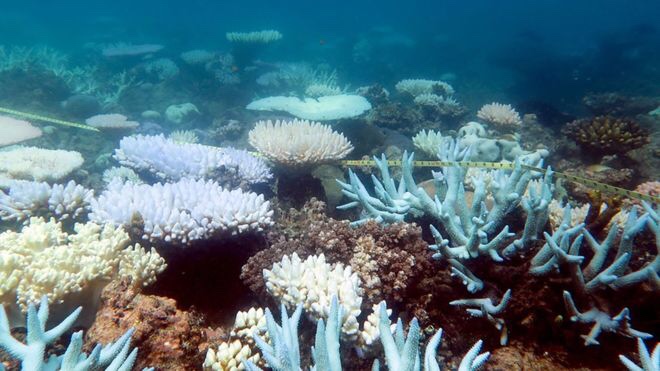
The rest of the journey we were invited to reflect on the environmental impact we humans were having on the Reef and how this was being combatted. Our Marine Biologist offered a wealth of information about the work being undertaken to counter this. We would see some bleaching caused by global warming. Work is still needed to deal with the antiquated fishing methods in the area, described as work in progress it is clear there is much to be done to protect it. As we neared our destination the anticipation and the anxiety about the dive grew. I knew one thing, this was going to be an absolute highlight of the holiday.


Darwin-A city in the North

We left the Ghan behind disembarking in Darwin, Australia’s northern most city. It’s a small city in comparison to Melbourne the population here about 150 000, around about the size of Dalkeith in Midlothian, but here in Australia it is a City. Darwin is a natural harbour and closer to Indonesia than it is to Southern Australia. Its climate is tropical and the heat and humidity are instantly identifiable. Darwin has two memorable events in its history that of the bombing by the Japanese in World War II in 1942 and Cyclone Tracey in 1974, both devastating the City and resulting in a rebuild.

Darwin was a strategic communication link following the development of the telegraph links with the south, a gateway to the rest of the world. During the war it was also of strategic importance for the Allied and American forces fighting in the east. We learned that the bombing of Darwin Harbour was much more severe than that of Pearl Harbour, over 200 planes led by the same pilot responsible for Pearl Harbour hit the Neptune on 19 February 1942. Although some two months after the Pearl Harbour assault, little was shared beyond Australia about the loss of 42 lives that day or the devastation to the City. We would learn that there was almost a complacency apparent in Australia’s leadership at the time of this attack which might well have contributed to that perception and the fact that little preparation or planning had been considered in the wake of America’s experience.

This disparity was sharply contrasted in the story highlighted at the must visit ‘Bombing of Darwin’ exhibition. Captain Etheridge Grant an American, was only too keenly aware of the impact of unpreparedness in Pearl Harbour. His seaplane ship the William B. Preston was well prepared for any potential attack. His crew briefed, his ship prepared, even though he was absent when the attack on Darwin occurred, his ship just as much of a target as it anchored in the harbour. His forethought, preparatory work and procedures he enforced beforehand ensured the safety of his ship and his men when the attack took place. The Awkward Truth; the bombing of Darwin 1942 by Peter Grose tells this story in more detail.

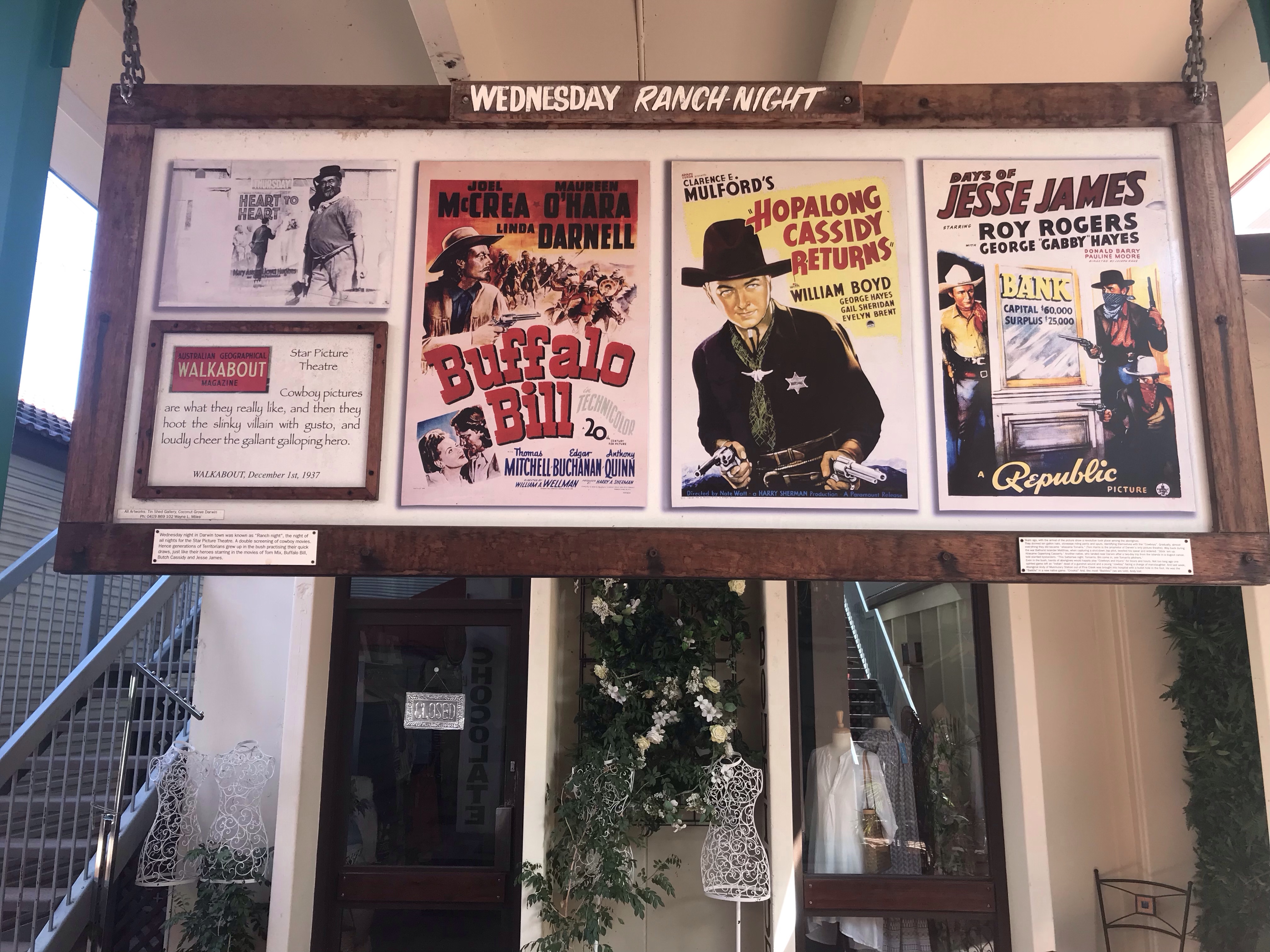
Following the devastating cyclone in 1974 much of Darwin has been rebuilt, as a tourist there are a few cultural nuggets to digest but overall the short stay was probably all we required. The Star Cinema is worthy of a visit, stepping back in time when the Cinema was the equivalent of Instagram. Posters advertising Buffalo Bill and High Noon were typical films of the time. Locals would crowd here on Wednesday nights to watch Cowboy films and then reframe themselves with hats, lasso and spurs when they got back onto their old ranch to emulate their hero’s.

The waterfront at the harbour has seen huge investment, artists enhance the experience with quirky but relevant artwork that intermittently pops up as you stroll along the skywalk and take the lift down to the lower water levels. There is no beach here but they have created a fantastic wave pool for families and a beach with volleyball net and safe swimming area. It was a roasting 37 degrees the day we sauntered down in that direction and what I would have given for a plunge in that pool. Cafes, bars and restaurants with the odd shop line the harbour walkway and you can idle many hours away here. But it was unearthly quiet at this location, the result of the corona virus curtailing many ardent explorers. Not us though.

Don’t expect fine dining here, food mainly consists of Parma chicken and burgers. We did find a little diamond at the rear of the Mantra hotel where we stayed, called Alfonso and their Pizzas were simply exquisite.

There was a bit an historic moment while we were in Darwin visiting the Bombing exhibition, as we waited in the queue ready to mention our tour company for the requisite discount when the teller asked whether I was a senior. I’ll let that sit with you for a moment, as I did. Did I look like a senior, if so I’m mortified with my appearance, or is this a standard query for the majority of older patrons? I had to admit this, although pointed out the Lion was yet to achieve senior status. Nevertheless she allowed us in for the vastly reduced price and off we popped to enjoy everything the centre has to offer, old age has its benefits. It is an experiential centre with virtual reality headsets and bomb alerts and shuddering, providing you with the real throbbing and noises of war in the relative safety of the exhibition.

Almost immediately the local Aboriginal people were apparent; the Larrikia People who are the indigenous peoples of Darwin who provided the first settlers in the area with food. Initially despite conflict and marginalisation the two peoples lived amongst each other, but this has not lasted. Most of the Larrikia people live outside the city. They have the longest running land claim in the Northern Territory but it has not yet been returned to the indigenous people the way other areas have. Whether this had some bearing on our experience of the aboriginal people I cannot say but it was one of despair, aggression and frustration. Most of them drinking all of the day and shouting or violent toward one another or anyone they did not like. Some of the group were laying by the pool when a group we recognised as causing a bit of aggression around town, came boldly up to the pool opened the gate and jumped in. Those around the pool watched this with interest as the staff poured outside to ask them politely, it must be said, to leave. Soaking from her recent fully clothed dip the aboriginal woman cursed us, soaking the Lion as he lay trying to be nothing but nice. She scurried away shouting expletives but leaving us in no doubt that we were not welcome in her country.

Out and about in Darwin that evening, it was like a Saturday night in any town, but aboriginal people were the ones fighting in the street, shouting, drinking and looking the worse for wear. It was clear there was a real intolerance for the indigenous people here.

As we wandered along the esplanade giant fruit bats took to the sky as dusk started its descent. Their high pitched squalling apparent at the busy streets where trees lined the walkways and roads. Hundreds of these massive bats could be seen as you watched the sunset over Darwin Harbour a beautiful sight with flurries of bats swooping and curling around you. Away from the pubs and busy streets in the main areas of the city the atmosphere is more congenial and you could enjoy looking at the old buildings here, not many of which are left. I did like Darwin but felt an increasing sadness about the people there. Perhaps if the land case was agreed things might start to work toward a partnership, a shared understanding, but as it is the hostilities evident in WW II were just as apparent today as they are now.


Nitmiluk National Park Northern Territories

It’s easy to see why the expeditions to the North were so challenging before the road and rail advances that exist now. It’s a long journey with harsh terrain and mountain passes. One of the highlights of the Ghan was the stopover at Nitmiluk National Park, one of several mountainous areas in Australia, its magnificent gorges have been carved out by the Katherine river over millions of years. We stopped here on the way to Darwin to explore the wonders of this breathtaking landscape by boat.

We disembarked the Ghan train at Katherine where a coach drove us a 30 kilometre journey into the Nitmiluk Park. Joining our fellow travellers from the Ghan from other carriages we waited in line to join the open sided boat that was to take us deep into the gorge. The trip included a 30 minute walk into the gorge to see the variety of rock art ancient Jawoyn people had created but overnight rain had flooded the path and disappointingly that was no longer available to us. Nevertheless our boat trip promised us some breathtaking scenery.

The native people of Nitmiluk- the Jawoyn’s- have a Dreamtime story which suggests the area was created by a river serpent, carrying water in a bag which it would not share with thirsty birds along its journey. So while it slept, the birds pecked the bag for a drink and it burst, flooding the mountains with this great river. The explorer John McDouall Stuart named it the Katherine river and gorge after one of his benefactor’s daughters disrespecting the aboriginal people who knew it as Nitmiluk. Today the Jawoyn people own the National Park reclaimed, as with other areas of aboriginal land, from the state who failed to realise its significance as ceremonial land to the indigenous people when the first explorers claimed it as their own. Having gained it back the Jawoyn people now work in partnership with the government to ensure that it remains protected. The area around Katherine bore slogans and businesses mentioning the Jawoyn people, indicative of their visibility and engagement in this small rural community.

Our crewman, the Puffin, was knowledgable in all matters pertaining to the gorge, so he narrated its historic and environmental aspects as he also steered the boat. It was a wide craft with three seats either side covered by a canopy to provide you with shade. Some people hungry to capture the essence of the gorge from pole position poured into the front seats where unfortunately the canopy did not extend any cover from the sun. They soon realised it was not the best seat in the house after all and all but one vacated their seats for the shadier rear of the boat. We sat smugly in the midway section shaded from the intense heat but more than able to see the view. Aside from the heat the humidity is fierce, at its worst in October-November this aspect of the climate can drain you of energy. Water was provided continually on our trip by our hosts and we were constantly reminded to hydrate.

The big draw, aside from the scenery was the prospect of seeing a crocodile, we knew they occupied the site and were eager to see one. Of course this interest would only be piqued from a safe distance and after it had eaten. The puffin prepared us for this probability with information about the creature but interestingly no safety briefing suggesting a sighting or encounter was highly unlikely. In the unlikely circumstances that we might see one, the puffin informed us there were 2 types of crocodile in these waters. The saltwater crocodile was a large, hostile and dangerous predator that entered the river during the wet season whereas the freshwater crocodile was a smaller more timid animal, both living off dingo, foxes or other creatures that ventured near the water. The saltwater Crocodiles were captured and returned to their own domain and the freshwater Crocodiles left in situ. Laying their eggs on small inlets of beach along the banks of the Kathrine these had protected status and where eggs were buried if disturbed by walkers venturing onto the site to have a look, might earn them a fine of 2000 AUD per egg.

The cliffs rose up intimidatingly out of the water towering some 200 feet above us, the tropical climate encouraging the sounds of birds and cicadas as we meandered along the still murky waters of the Katherine River. Cabbage Palms intermittently dotted the clifftop landscape like long fingers reaching for the sky. The chalky apple tree lining the route of the river bank does bear a fruit which is best eaten days after its been in the water. The Pandanus tree, palm like in appearance with attractive leaves, are of huge value to aboriginal people providing medicine, fruit and weapons. River red gum trees produce a resin self healing cracks or holes caused by weather, fires or animals. This is primarily to prevent a little grub gaining access called the borer which infests and damages the inner trunk. Cycads; the oldest living plant in the world has been around for 250 million years and has adapted to its surroundings over that period. Looking much like a Palm tree but not a Palm it produces poisonous fruit that looks appealing but is best left out of the salad.

Nitmiluk translates as the place of many Cicadas an insect common throughout the world that uses song to attract a mate, sounding much like a single tone scream to the human ear. This sound filled the air as we sailed toward the gorge. Cane toads added depth to the sounds of the river, they were introduced to Australia from South America to counter the cane beetle which destroyed the sugar cane growing in the east of the country. Sadly nobody sent them the memo that the cane toad was out to get them so they climbed higher into the cane and the toads found easier prey closer to the ground. Despite not completing the job they were introduced to do they went forth and multiplied pretty vigorously making their way across to the west of the country and now a pest themselves in the Northern Territories. The toads are poisonous animals, carrying venom on their backs to protect them from predators. However as we know nature has its own way of adapting to such circumstances and the Corvus, a large crow arguably the most intelligent of the bird species, has discovered that flipping the toad over onto its back reveals the unprotected juicy belly. Cane toads are considered a pest and found in plentiful numbers in the Nitmiluk.

The Nitmiluk has 13 gorges in total the ancient sandstone rock follows the Katherine River all the way to Kakadu in the north and has rapids and falls throughout the route. Most of the falls we observed along the route were minor in nature, the remnants of overnight rain gushing in some areas, trickling in others. The real falls would be visible from our gorge walk but it had been cancelled, as it was we snapped every trickle or gush of water along the way. The sandstone coloured with yellow and red and occasionally blackened by an algae changed colours in the sunlight. Although steep and flat there were gully’s and caverns giving the landscape interest as it wound its way along the river bank. We could see the rapids in the distance and I did hope the little flat tourist type boat gave them a body swerve as we would have been tossed, turned and considerably wet if that was the case. Thankfully the little boat came to rest ahead of where these gorges converged and the currents competed in a rapid fury for prominence.

Our little boat, shy of the rapids made its way back along the river to see more of the gigantic cliff tops, before heading back on the bus to the Ghan where a light refreshment or two might be needed. No question Australia has some beautiful sights to see……


The Ghan- living the dream.

Having successfully mastered the narrow walkways and links between carriages we joined our fellow travellers in the bar. Large sofa type seating provided sectioned off areas with little walnut side tables. We joined the group and ordered a round of drinks, little nibbles and canapés were provided to tide you over till dinner time. We had an 8.30 sitting and so would have time to have a few preprandial’s before we needed to shower and change into dinner attire. The sparking wine flowing too well during this first stint, meant the return to the cabin for the shower and dinner change was a hoot.

The birthday luggage looks fabulous but storage in the carriage was at a premium so we couldn’t find a place to keep from falling over it. The Lion was becoming frustrated as we tried to unpack in what felt like a phone box that constantly swayed, clicked and rattled as the train chugged along. I had carefully rolled up my outfits, knowing that there was no iron on the train, but both looked slightly worse for wear when I pulled them out. Hanging them up did little to masque the crease marks. The toiletries were minimised to enable us to maximise shoes on the carry ons as of course there were multiple functions for shoes on the trip. Sitting, walking and looking nice.

We managed to locate everything we needed and drew straws for the first shower. I won, knowing full well that was a fix, given the time needed for me to get ready. I got inside the neat little toilet, thankful I was not much taller than I was and less round than I easily might be. The colourful ribbon released the shower curtain and I skilfully pulled it all the way around to protect the loo and skink from getting wet, leaving less than 2 feet in diameter in which to shower. The first mistake was not testing the water, so pulling it on I was immediately scalded and found no where to jump clear of the gushing flames masquerading as water. I pushed it off, meanwhile the Lion, recognising a drama when he hears one, sat without uttering a word and ignoring my shouts for assistance. I wiggled the tap a bit to the left and tentatively turned it back on, the flames subsided – the water much more bearable now. However the soap and shampoo were behind the curtain and this was my second mistake, it meant a further fight as I became entangled in the wet shower curtain now clinging to my skin like a leech. Fighting back the area it was designed to keep dry now swimming in water. As it continued to cascade I managed to return it to its position and exhausted, eventually was able to commence my ablutions.

Finally it was time to return to the spacious cabin and try to get dried and dressed. Humidity filled the room from the steamy bathroom as I stepped onto the little mat and tried to get dried. Now I knew why I had won as I explained all of the things not to do when the Lion first encountered the shower. All our toileting complete I was glad to have set maximum time aside for this, given that we had not done it before. Still feeling jolly from the wine I had earlier, we made out way back to the bar carriage where we felt obliged to enjoy even more wine before dinner.

The dining experience is fantastic, food is served to you on white table cloths, with sparkling wine glasses and sliver cutlery. A little tight, but nevertheless promising the romance I desired. We were fortunate to dine with the Tigress but our other diner was unknown to us, not to worry we knew everything there was to know and more by the time she had finished and so did the rest of the dining carriage. That said we drowned our her musings as we tucked into our fabulous beef cheeks, prawn starter and cheese and biscuits with port and Cabernet Shiraz providing the refreshments. Not quite squiffed yet I returned to the bar high on life before realising there are no public toilets on the train which meant another lengthy walk back to the cabin. A little unsteady on my feet from the wine and port, I found to my alarm it had been raining. Each of the links between carriages had long since served passengers well enough to stop the rain from leaking through, makeshift tarpaulin was now all that stood between me and the onslaught. I thought I might try to fix it since it seemed to be letting in quite a bit of water but this only resulted in my second shower of the evening and I was drookit once more.

Given the wine was making me sleepy and carefree, the Lion thought it best to curtail my enjoyment by packing me off to bed before I crashed and burned, with clear instruction to sleep in the bottom bunk. I was delighted to see the Parrot had made the beds ready and a set of stainless steel ladders lay invitingly against the window. Having been advised against it, I lunged upwards to the top bunk, managed to put in my ear plugs and drift off to sleep without a care in the world. You can imagine my horror when the disco lights started flashing at 6 am, the Lion wanting to make sure I was up and ready for the day. Breakfast is served between 630 and 830 so he felt we needed to be there early since we had a trip to Nitmiluk at 9 am. Turns out he had not put in his ear plugs and the jolts and clicking of the gauge and rail did not lull him into a sound sleep, he was not alone. He had been awake all night (apart from his time in the bar of course) and had now morphed into the Gruffalo in the process. Grumpiness does not make for a conducive arrangement for the morning ablutions in a confined space and so we bumped and huffed silently as each of us tried to take turns at getting ready. Half an hour later we made it to the dining carriage with our happy faces on.

This was the first breakfast that had been served to us the entire trip, most hotels now favouring the serve yourself arrangements. It was an indulgent pleasure we welcomed. Coffee and tea poured, the three courses began leaving you satisfied and ready for the day, but at the same time wondering how you might manage to find a space in there for Lunch. Following our trip out to Nitmiluk National Park ( more later on that) we returned to the train 20 minutes ahead of our Lunch slot. Dismissing the experience with the shower out of mind I opted to have another more informed and less messy affair this time. Emerging fresh as a daisy we made our way along to the dining car where it was immediately apparent wine would again be the order of the day. Consciously trying to avoid over doing it a second day, the Lion, through lack of sleep seemed to have the alternative view. He struck up a friendly banter with the Cheetah who was the manager on the train. The friendly banter turning into a bit of a competition and soon they were playing tricks on each other. The cheetah at one point walking by pretending to drop a hot coffee all over him. The fellow travellers were in fits of laughter at the normally quiet Lion who seemed to have emerged from his cage for the last part of the journey. With minutes to spare before we disembarked the final jokes and hilarity waning we wandered back to our cabin, nicely prepared for our leaving by the Parrot. Gathering our luggage together we took in the Northern Territories as we disembarked from this marvellous train. Had we been here on our own, a couple of lone travellers, I seriously doubt it would have been half the fun and games that it was. The Ghan did not disappoint in its majesty and comfort and a massive thanks to everyone on the trip for making it all about friendship and fun.

The Lion and the Cheetah

The Ghan- great train journey of Australia

From the get go the anticipation about the journey on the Ghan train was a reflection of the importance of this part of the trip. Not that we were great train enthusiasts, on the contrary nothing could be further from the truth. Despite residing only 15 minutes from the famous Cantilever Forth Rail Bridge, a couple of hours from the infamous Harry Potter Glenfinnan Viaduct and a short drive from the author of Trainspotters there is no way we might be classified as enthusiasts. But there was something about the prospect of an overnight train journey through the outback that brought out the romantic in me and I think the promise of romance in any form is not to be sniffed at when you’re this age.

The railway line that links the South of Australia, Adelaide, with the North, Darwin, has taken many years to complete. In 1929 the Adelaide to Alice Springs stretch was completed but it would be 1980 before it was completed to Darwin. Katherine, just south of Darwin, did have it’s own line linking it with the City in the North but the railway line that completed the journey from Alice Springs was a long time in planning and completion. Having visited the terrain there it is easy to see why it might take some time or indeed some enthusiasm. The Ghan journey takes 54 hours travelling a total of 2 979 kilometres. Not all of the journey is confined to the train, for the tourists booked on it, there are stopovers in Alice Springs for 4 hours and Katherine, 3 hours to enable you to explore the precious landmarks on route to Darwin.

The name, the Ghan is disputed, but thought to be a shortened version of the Afghan Express, this story predicated on the first passenger to make the long journey who was allegedly an Afghan. The popularity of the train journey when it was first launched was not entirely fulfilled. Many thought the whole prospect of travel by train to the North was a bit of waste of their time. Delays were often caused through track washouts. Other’s believe the Ghan was so called after the camels imported from there who would take travellers onward from Alice Springs long before the track was completed. Whichever you prefer the Ghan creates a majesty, mystery and the promise of a journey of a lifetime, should you choose to do it. I won’t lie the scenery along the way is monotonous and bland, the only added interest are the termite hills and how innovative their design, shape and colours were. Other than that it’s desert.

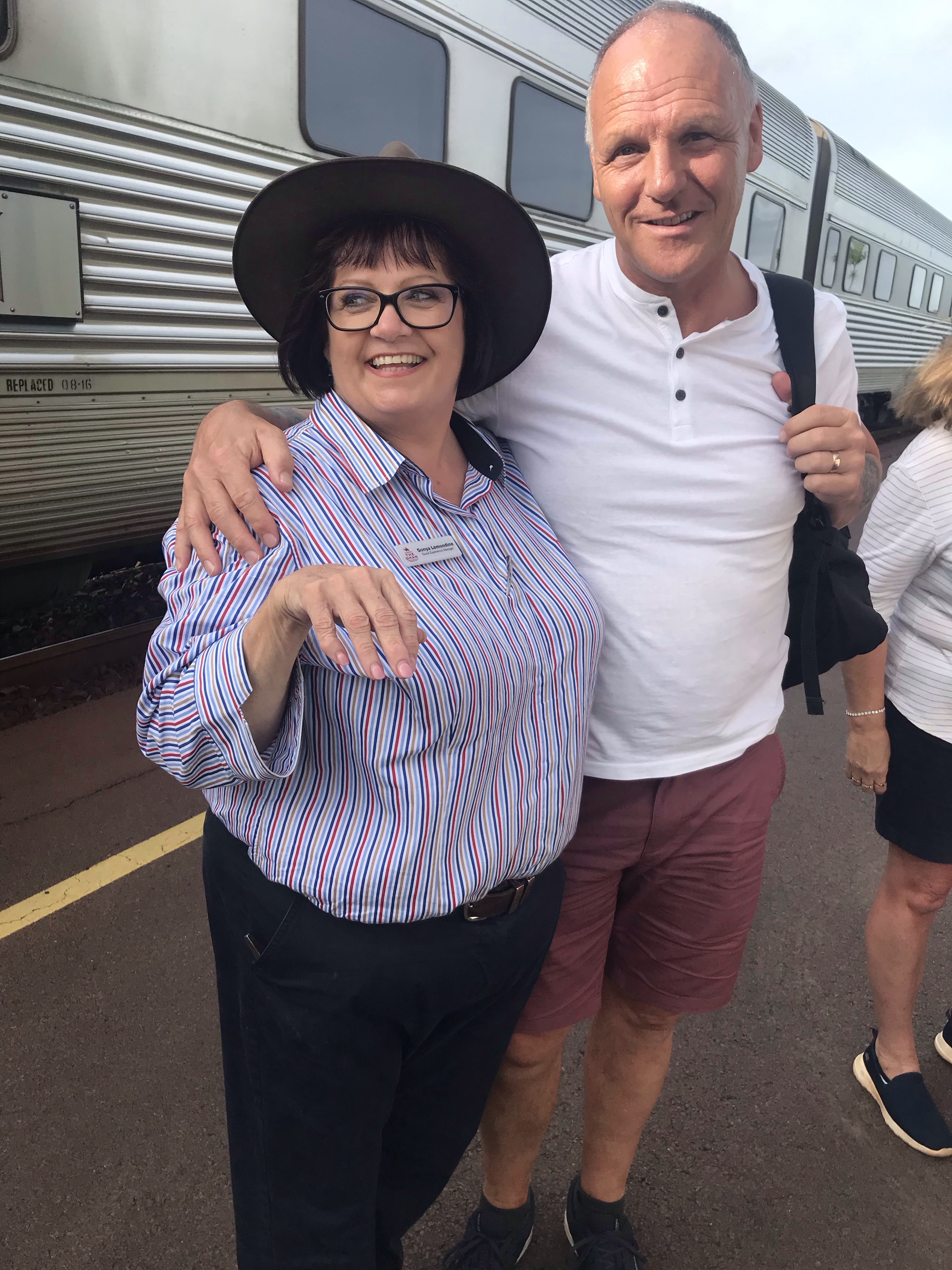
We were boarding the Ghan from Alice Springs at 1730. The train station was buzzing with excited travellers, while train staff offered us complimentary drinks of the non-alcoholic variety. A solo artist was paid to strum his guitar covering Passenger and Ed Sheeran songs as he hopelessly tried to drown out the constant shrill of excited chatter from eager passengers. The Ghan was privatised in 1997 and the company who operate the Ghan “Journey Beyond Rail Expeditions“ meet and greet you in the Alice Springs train station, their navy blue trousers, bush hats and blue, cream and burgundy striped shirts smartly identifying them among the colourful characters waiting to travel. Dining times and room numbers allocated we wandered outside to survey the Ghan in the metal.

There are two locomotives providing a hefty 132 tonne pulling power, bright red in colour it stands aloof, nonchalantly waiting for things to get going. Coming along behind are just a few Annie and Clarabelles (Thomas the Tank engine fans I apologise), 38 carriages in shiny stainless steel making the average length of the train about 774 meters long. Doubtless a bit much for Thomas or even Big Gordon to pull. There was a constant stream of people walking back and forth along its lengthy carriages, dwarfed like ants against this huge monster, diminished even further by the lack of a platform. Every passenger was keen to have a photographic memory of the giant locomotive pulling them north to Darwin. We noticed one of these hopefuls limping along with a walking stick, halting 200 meters from the front he appeared to turn back, exhausted by the sheer length and searing heat. I sympathised with him, given my experience with the hamstring injury so I stopped to talk to him. Having established he was trying to get the obligatory picture I introduced him to the delights of airdrop and shared mine with an ecstatic new German friend.

Suddenly the bell tolled and automatically all 38 carriage doors swung open and an access frenzy began. A steel step ladder had been slotted into position easing our entry and standing astride the pavement and the ladder was our carriage host. The parrot was ours, a tall slim young man, with a warm welcome and nervous smile. We had a room J2, which was near the entrance and he directed us to wait in our cabin until he arrived before we left. We got our first glimpse of inside the train as we navigated the narrow walkway almost sideways as we searched for our cabin. At first sight it’s hard to imagine how James Bond fought so violently with Jaws in the train scene from ‘The Spy who loved me’ when you consider the actual size of the room. A comfortable bench seat covered in pale green embossed fabric backed onto a walnut facia, concealing the top bunk, that would later be our sleeping arrangements. There was approximately 2 feet between the seat and the facing wall that neatly contained a mirror, wardrobe complete with safe, refuse bin and door leading to the all important en suite. Within this little cubicle were an array of high quality shower gels, shampoos and conditioner to use with the shower. A shower curtain fixed with bright ribbon and a stud to the wall caressed a rail that circumnavigated the space and neatly consumed you while protecting the loo and sink while you showered. Towels were concealed behind a frosted glass cupboard sunk into the rear shower wall. All perfectly bijou and still relevant despite being designed in the 60’s.

The Parrot arrived to advise us where everything was and how it worked, clearly for the non-inquisitive who would not have explored the minute they arrived in their cabin. Once we had passed his muster we were advised we were free to join the bar carriage and when we returned from dinner that night he would have our beds ready to enjoy our overnight ride in the train.

All drinks and food are included in the package and this made for a jolly atmosphere. There are currently two packages on the train; platinum (we were not this) and gold. It’s all inclusive and according to the staff, the food and drinks are the same in both packages just the sleeping accommodation differs. Our single passengers had a roomette but much to their consternation no en suite. The elegant antelope on our trip had made a really relevant point about paying extra as a single traveller for second best accommodation. It did seem a bit unfair. One of the staff, a tall peacock from Prague, advised us she had travelled in Red service as a back packer which was the no frills side of the train but this service had long since been dispensed with in favour of the gold and platinum premium paying passengers.

As this monster got under way, we let our excitement get the better of us and cheered, raising a glass of whatever we had in our hand to a right good trip…….and whatever awaited us.


Alice Springs- final stop in the outback.

The romance of Alice Springs, which I derived from the film ‘A Town called Alice’ fell flat on its face when we finally arrived there. Of course this wasn’t the Springs of the film, we would catch that a bit later when we visited the old Telegraph Office. In fact the key elements of Alice Springs trip were the visits we experienced on day two, but I’m getting ahead of myself let’s start at the beginning.

From the Stuart Highway we eased into Alice Springs through the narrow gorge between the East and West MacDonnel range of mountains. En route we were informed that Americans form over 1 000 of the 28 000 people that reside here mainly working out of Pine Gap a joint defence facility, one of three in the world, the others being located at Quantico and Yorkshire in the UK. The other place of interest was the maximum security correction facility just on the outskirts of Alice. Although Lassiters Hotel here is worthy of mentioning since it is where Priscilla Queen of the Desert was filmed.

Our hotel was situated on the edge of town with a meandering footpath along the dry as a bone River Todd, which was dry owing to the low rainfall in the area. We were informed it had not rained since September 2019, but despite this drought it was to rain while we were there. Aborigine families congregated by the river each evening in small groups of about 10 or 12 in number. In Alice we saw many more of these indigenous people than previous stops and it was an insight to the challenges that they experience. Many, unable to cope with western diets are plagued by diabetes, kidney problems and alcoholism. It is a sad indictment of the assimilation into Australian society that this has failed so spectacularly. Not that they need to assimilate of course, but western life has impacted on their health even if other elements have not impacted on their lifestyle.

The tigress pointed out BoJangles, on the left hand side of the current road we were on and proposed that it might be worth a visit then continued to draw our attention to potential restaurants and other places of interest in the town. The town resembled an industrial estate, with flat roofed buildings some adorned by beautiful murals of Aborigine life. The idyllic pictures did not appear to reflect the reality for most of the indigenous people we encountered. Finally dropped at our hotel the evening plan was a bush tucker barbecue and pick up in less than an hour. The long drive from Uluru over we were glad to find a great welcome at our hotel.

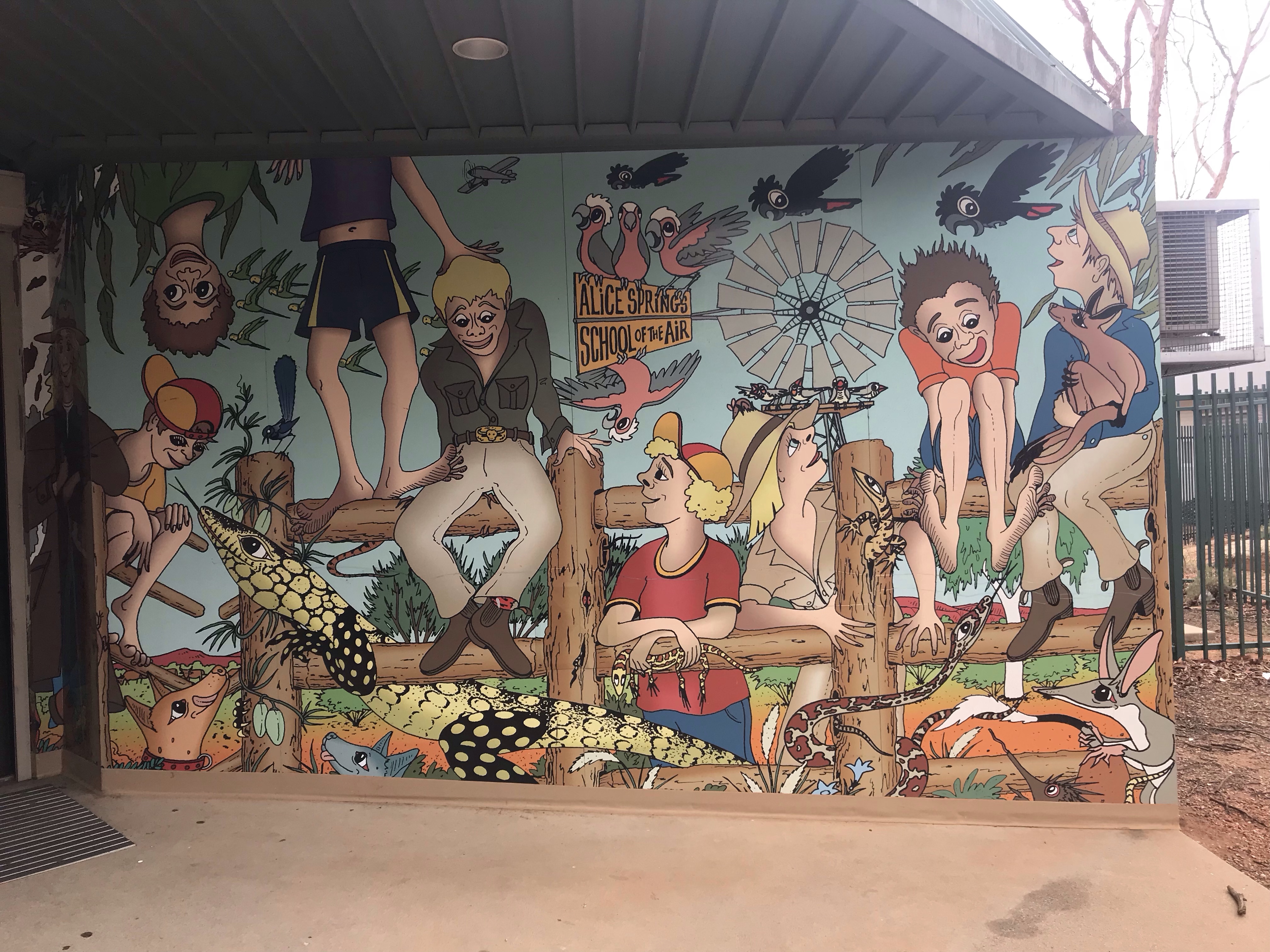
Our second day at the Springs was considered by us to be a bit of marching time until we boarded the Ghan, we had three stops to endure before then. But we were wrong these visits were equally fascinating. The first was to the School of the Air ( the world’s largest classroom). Based on the Flying Dr’s model the idea of educating children in the outback was first started in 1951. It covers an area of 1050 square kilometres and those children who are 50 kms from a school are eligible to enrol. The first lessons were communicated by two way radio but the internet had vastly advanced the quality of teaching interaction and individual lessons. Children are supported at home by a home tutor, sometimes the parent, and will spend a week in the school three times a year collectively with all the children. In the Northern Territories this is about 101 children eligible from 4 and a half years old. Each child is furnished with around $18 000 dollars of equipment including a satellite dish, computer, printer and web cam. Aboriginal children currently make up one third of the children in school. This model provides good outcomes for children who are attaining above average against those who attend school. We bought a book to donate to the library and dedicated it from our granddaughter’s (the mermaid) school in Livingston Village.

The trip to the Telegraph Office was the romantic aspect of Alice Springs I was hoping for, small buildings retaining the original furnishings and equipment. These were free for you to wander around in and gave a real sense of the life that early settlers here had to endure in the heat. The ‘spring’ aspect of the town was in fact a soak and not a spring at all but some how Alice Soak didn’t have the same appeal. Although given the amount of alcohol we saw locals consuming perhaps the factual name was more appropriate.

We then were transported to the Royal Flying Doctor’s service which came into operation in 1917. They cover an areas of 7 million kilometres in Australia and about 800 kms in Alice Springs. The RFDS have 40 aircraft in the fleet and 23 bases across Australia with an annual budget of $304 AUD. We had a great experience in both facilities and were about to embark by coach to our final stop on Anzac Hill when it came to light that the driver had kerbed the coach and the door would not open. We had now to wait for the repair service to arrive and who knew how long that might take.

We were now into this trip by about 2 and a half weeks, we had bonded at the barbecue and amalgamate anticipation for our trip on the Ghan was evident. So when the door refused to open more than a few inches, the team spirit we had been nurturing over the past few days kicked itself into action. The Lion and the Liverpudlian leant their backs into the 10 tonne coach (our luggage included maybe nearer 12 tonnes) above the wheel arch and tried to lift it. Yep share your views, crazy alpha males; however this strength finally reached the brain cells and was diverted to pulling the door a few millimetres more. They then looked around for a skinny person able to ease their way inside and start her up and release the door. A few pairs of eyes fell on me momentarily but I knew they were being kind as they quickly dismissed that idea. Then out of no-where the horse whisperer stepped up on behalf of the team to take on this particular challenge. And it was a challenge but there did seem to be a match between her delicate frame and the space to get inside. With space to spare she lithely slipped between the door and the frame and was inside in a flash. The driver, a female with bright pink hair, watched amusedly as she tried to speak to the company on the phone and we waved at her incessantly to get the instructions as to how we might start this beast up.

The horse whisperer sat on the bouncy driver’s chair, seeking guidance from the driver, then deftly put the keys in, pressed a button and started it up, releasing the suspension that raised the bus and opened the door. A loud cheer of delight went up from the group as we finally boarded the bus and paid homage to the horse whisperer who revealed all of the confidence came from passing her HGV some years ago, you just never know what talents people have up their sleeve. As we all piled in, we kept asking if she would also drive the Ghan if it broke down.

We had a short visit to the moving tribute at Anzac Hill with memorable and informative signage that provided a summary of the war and conflict many had fought in and lost their lives. A fitting tribute looks down on the sad and desperate Alice Springs . We made one final stop before we headed to the Ghan and that was to BoJangles.

BoJangles is the local hostelry, used predominantly by the Aborigines whom the owner fiercely protects from prying cameras. But this grubby little pub was full of character and interest, from the boots on the ceiling, the coffin of Ned Kelly and the gun inset into the bar. every wall, every corner had something to catch your attention. As we prized our flip flops from the stickiness of the floor we enjoyed being part of a group in this little pub, and caused quite a stir among the locals. But it was a sad indictment on social policy in the country to see how the indigenous people are living. It will be difficult to reconcile difference and live in harmony here. We left the Springs with mixed feelings about the trip to Alice and what the reality of life for the poorest in this area was really like. Only the Ghan promised to divert us from this tragedy…….

The School of the Air Alice Springs